
There is No Philosophy of Fashion
On Modesty, Sexual Shame, and Subversion

This post relies upon the premise that I established in this essay—
For a woman whose priority is the pursuit of virtue and who accepts the premise above that by her very ontology clothing holds more significance for her than for man, the question of what the fashions she chooses is not trivial. However, the issue of judging fashion often falls into male-centered or control-centered metrics and can become rigid or scrupulous, burdening women rather than empowering them. Too often now I read about how if only women returned to 1940s or 1880s dress, or even merely abandoned pants, society would suddenly transform into a traditional paradise. But we do need a framework for modesty in modernity, in response to valid concerns for how popular fashions portray female personhood and facilitate relationships. These concerns arise from the reigning philosophy of subversion and rebellion in fashion design for the last century, which having succeeded in breaking all taboos, has now reached an impasse.
In order to build such a framework we must first identify what I consider the two different types of fashion. We must then examine how new fashions of the first type are developed and promulgated, and then finally develop an ethical framework by which we can discern what is good and what is bad.
The Two Types of Fashion
Fashion is the marriage of necessary craft and of outpouring creativity. Fashion that becomes so ornamented, so technically impressive, and so impractical as to be wearable art has existed for thousands of years. However, in the modern fashion industry, we have introduced an element of performance art to fashion in the medium of the runway. Christian Dior was the first to transition from a private studio showing or “fashion parade” for clients and buyers, to an event open to the press and general public.
Today, the medium of the runway is used by many designers that are exclusively concerned with making clothes that are to be worn exactly as they are presented. And there are also many that opt out completely. This is the first type of fashion. But ever since the widespread adoption of the runway as the medium par excellence for fashion, there have been a cohort of designers in each generation who began to use fashion as a vehicle for storytelling beyond what anyone could wear in any practical sense. For them, fashion includes building a set, creating an installation, choreography and soundtracks. The total effect communicates a subliminal message. It is a theater.
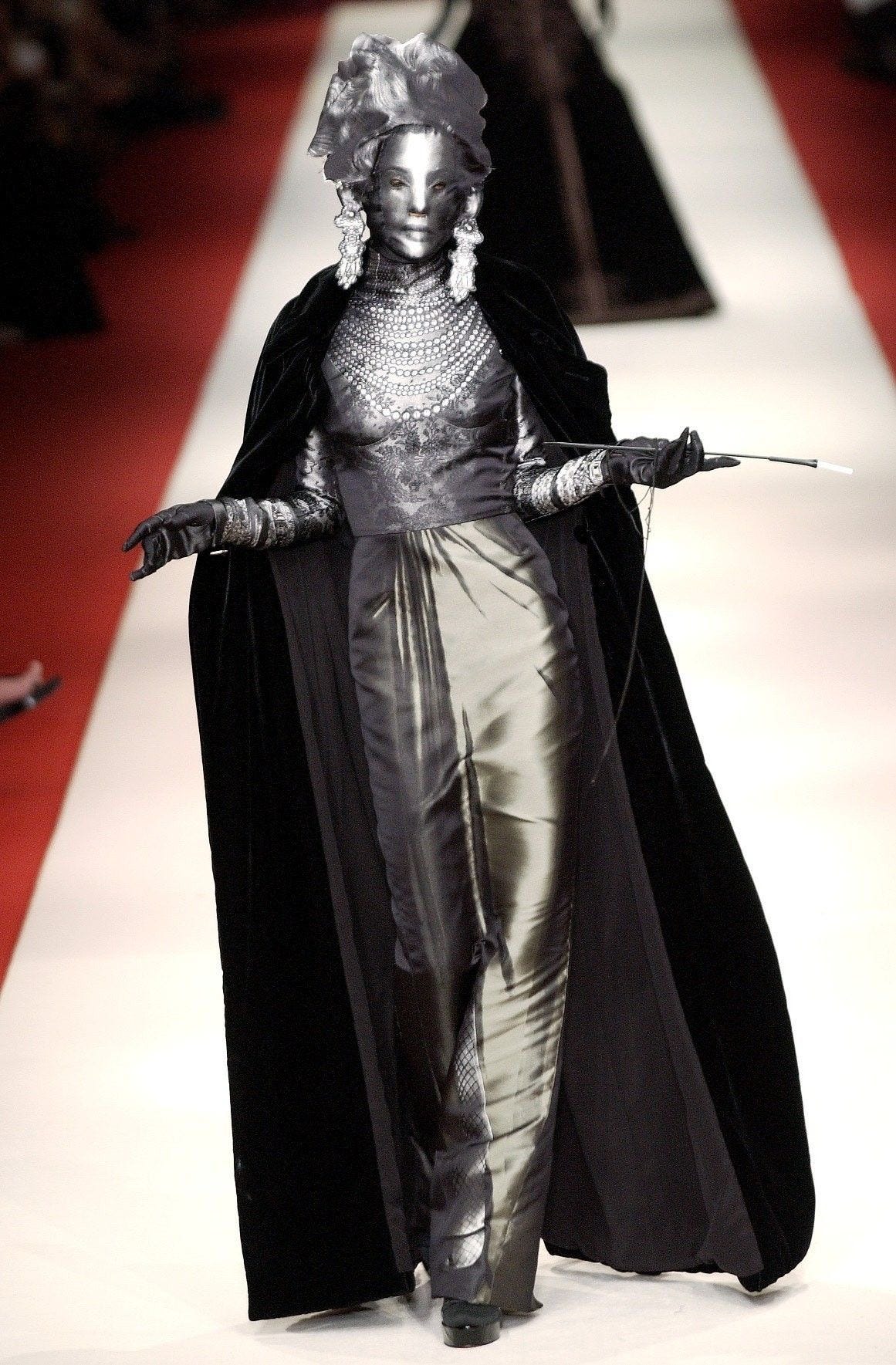
I make this distinction between a designer that is concerned with fashion’s theatric potential and a designer who is clearly making what he thinks people ought to wear, because there is a fundamental difference in intention which demands a distinct mode of reception. Recall that my intention is to develop an ethic or method for interacting with fashion that incorporates an interest towards modesty and the sacredness of the human person without falling into excess (shamelessness) or scrupulosity (prudery). Therefore we must first set aside fashion, the second type, that undertakes a more artistic project for a different sort of evaluation; that which can objectively decide what is good or bad art. Those concerned with virtue and transcendence in art must have an answer for art that is technically impressive but borrows from the creativity of sin in order to deprave the viewer. This is an essay for another time.
But many people concerned with modesty look at the runway (or even the red carpet) blind to the artistic intention (which is only truly tangible when you are present, as with a play), and dismiss objectively good art because it would look strange or scandalous on the street.
Modern Fashion’s Reigning Principle of Innovation
Now that we have set aside the second type of fashion for another time, let us return to the first type of fashion. It is important to note that this first type of fashion does not exclude all storytelling or theatricality, but is primarily intended for practical use as the clothing that people wear.
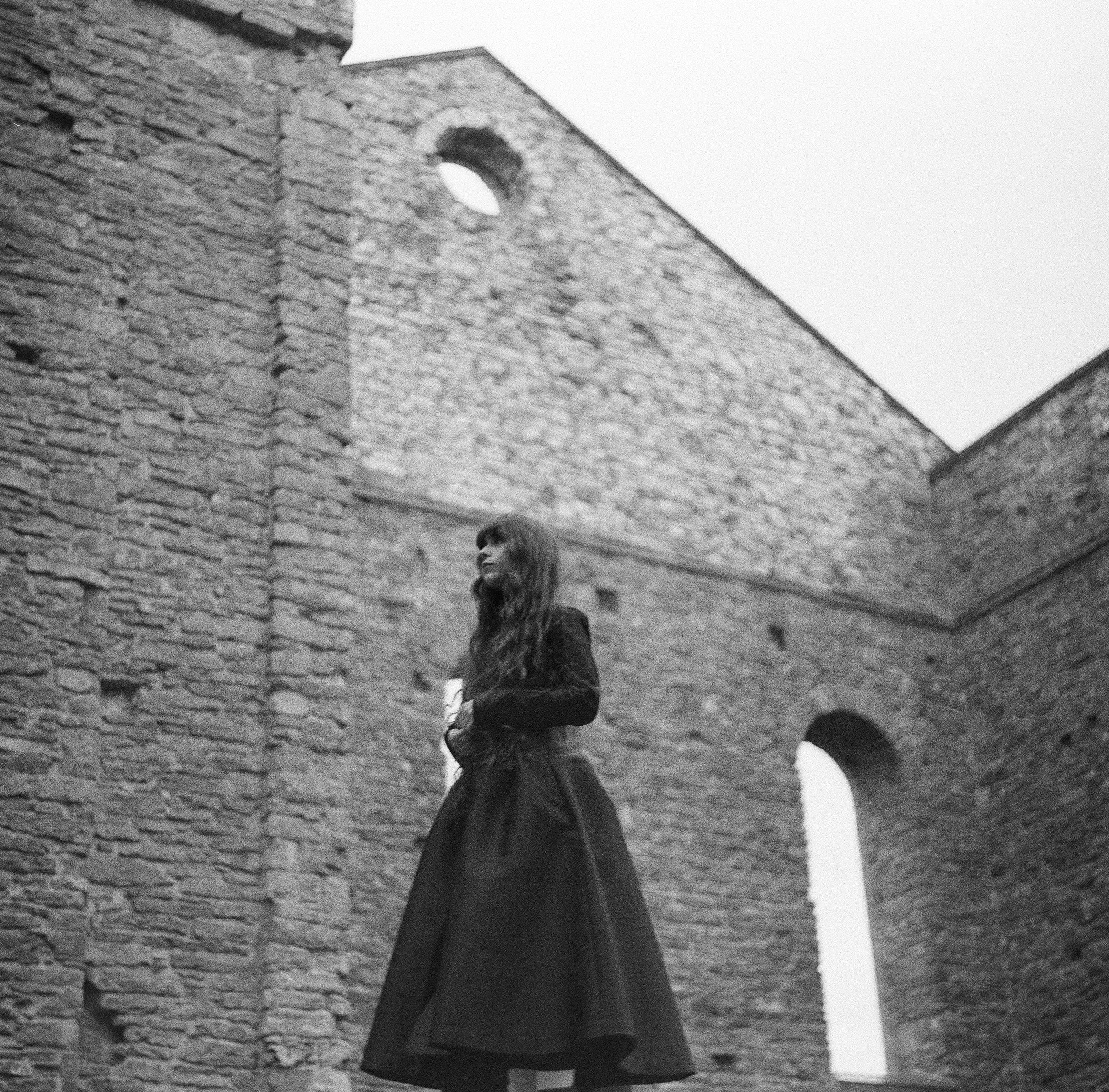
The last one hundred years, popular fashions evolved primarily by the breaking of taboos. The stringent societal standards for hemlines, or expectations of certain fabrics in certain settings, or class connotations of certain styles, have all at this point been deconstructed in service of fashion design and innovation. This is why there is no longer a defining look of the decade; the embrace of pajamas and athletic wear for nearly every possible social setting meant there is no further innovation possible in the same manner that fashion has been proceeding for a century. This also explains the resurgence of past styles, everywhere and all at once (the death of the twenty year trend cycle), and not just vintage styles. Even clothing that has for reference the European medieval period or ancient, agrarian lifestyles is trending. The ascendence of workwear is also thanks to this design dead-end.
We are not going to re-sexualize the ankle, or the belly button, or whatever fashion taboo has been previously broken. To prescribe parameters for modesty from decades ago is unhelpful, because they are no longer legible to us. We have allowed such a wide range of clothing in the public sphere that we have reduced sartorial communication to the wearer’s intention and context. Without societal norms for clothing, immodesty has become like pornography— you know it when you see it. Immodesty reduces the person to the sexual, which is a distortion of a more complete understanding of personhood, as containing a multitude of different values.
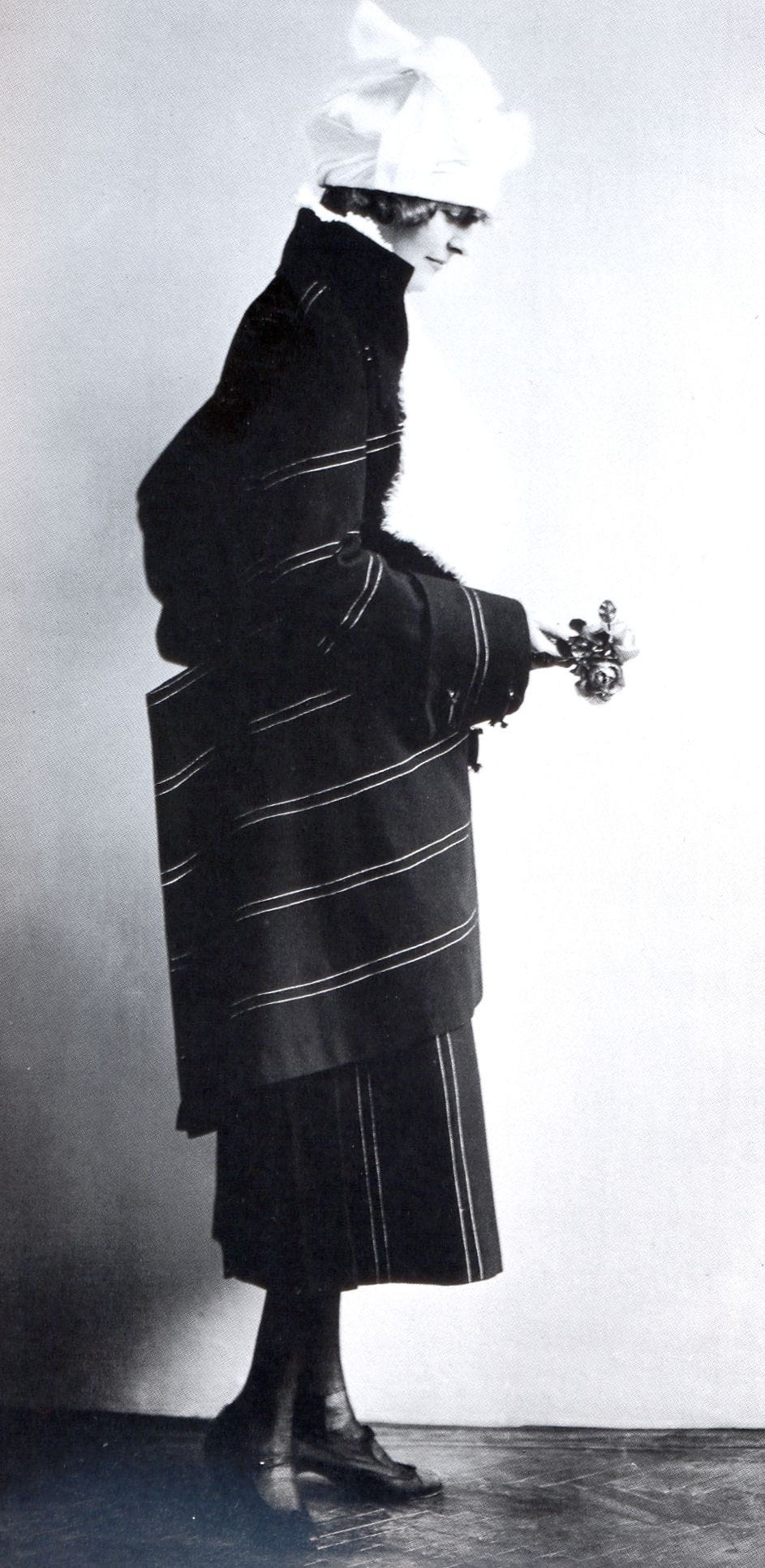
Despite this fact, we must also not throw up our hands and buy into walking around naked or wearing slop. To quote another one of my previous essays, drawing from the thought of John Paul II,
“When a culture shows an explicit tendency to cover the nakedness of the human body, it certainly does not do so for only climatic reasons, but also in the relation to the process of the growth of man’s personal sensibility. The anonymous nakedness of the man-object contrasts with… an authentically human culture of morality…. The process of sharpening human sensibility is certainly a factor and fruit of culture.” The tendency to cover the nakedness of the human body reveals the universal experience of nakedness rendering us both object and anonymous. A culture of authentic human relationships and morality is sensitive to the human need for intimacy with our own bodies. This need is not legalistic but ontological, in that the body reveals to some degree what is hidden about each person and what is able to be given as gift, that is, our own masculinity and femininity. But our own culture does not tend toward clothing the nakedness of the human body, but toward revealing it, showing a lack of sensitivity towards personhood and a preference for anonymity.
Why Modesty Matters: Sexual Shame
The central issue with prescriptions for female modesty in dress is that they stem from a misunderstanding of the function of sexual shame. They view male interest in the female body, and any display of feminine beauty, as perilous or scandalous. To varying degrees this results in a Manichean view of the body as bad.
In his Love and Responsibility chapter “The Metaphysics of Shame,” Karol Wojtyla challenges this popular conception of shame, writing, “we often feel ‘ashamed’ of what is good, a good deed, for instance.” He says that the phenomenon of shame “arises when something which of its very nature or in view of its purpose ought to be private passes the bounds of a person’s privacy and somehow becomes public.”1
We are unable to divorce the phenomenon of shame from the concept of the singular personhood which exists at the interior of each individual, and this interior life exists at the meeting place of the body and soul. To make every single interior movement public is therefore just as immodest as nudity in an inappropriate context. The following quote in the same chapter is where I got the name for my substack, The Turtle Dove: “each person possesses an interior quality peculiarly its own, and that from this arises the need to conceal certain experiences or values, or else to withdraw with them into itself.”2 This describes the behavior of a turtle dove, who so loves to hide itself in the clefts of rocky cliffs, and show itself only to its mate.
Social media was introduced right at the end of the total breakdown of any sartorial taboo, marking the transition from physical immodesty to the immodesty of making public every interior movement, of exploiting not only our bodies but our interior lives for public spectacle. This new sort of immodesty of the interior life is insidious. It spreads the lie that it is good to share everything about ourselves, that there is nothing to gain in reserving some of ourselves for the Spouse of our soul. The abolition of privacy has only served to make us feel lonelier and more misunderstood. Immodesty shatters the natural solitude that can draw us to God.
The sticking point about physical modesty is that it is unequal in practice. Wojtyla notes that women tend to be physically shameless (either unconcerned with or exploiting the affect of their beauty on a man), and men tend to be emotionally shameless (entertaining objectifying or lustful thoughts about a woman, regardless of if she has solicited this reaction).3 The sexuality of a woman is more apparent in her physical form, therefore she carries more responsibility in this realm. The sexuality of a man dwells almost entirely in his thoughts, and so he must vigilantly guard his thoughts. I don’t mourn the loss of the full-length hemline, but this norm was upheld in part in an attempt to reduce emotional shamelessness in men.
Discernment for Personal Choice of Fashions
In a society that has dismantled all fashion norms, the responsibility for physical modesty, decorum, and propriety is returned to the shoulders of the individual. In one sense it is more difficult to be modest, because it takes more intentionality. In another sense, you are empowered to make one hundred percent of the choices related to the fashion you will wear.
Those who find modesty and decorum important in 2025 must be careful not to become prudes in reaction to a shameless society. To be obviously modest is a contradiction. The context of physical modesty matters. There are particulars to virtue that apply to particular historical moments, including times when there are no norms for dress.
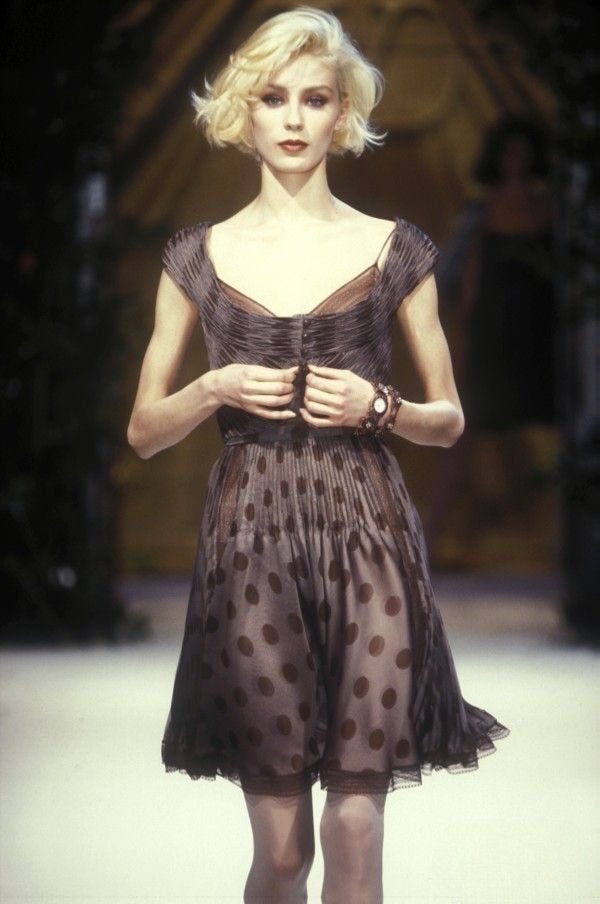
Advice given to women on modesty in clothing is often either male-centered or control-centered, rather than person-centered. Male-centered advice (such as teaching women to fear the way that men look at them) paints men as depraved, idiotic, and uncontrollable. Control-centered advice (such as lists of exact items or shapes that cannot be worn) teaches women that modesty is not an issue of discernment, but rather a rule book. The ideal for modesty should be based in reverence for individual personhood. Any departure from this will result in prudishness, rigidity, or scrupulosity, burdening women rather than empowering them, in addition to straining the relationship between men and women.
To return to my essay Sacramental Clothing
When choosing what to wear , we must remember that as body-soul composites, we are able to intuit the intention of the designer in the fashion, and that our own intentions in our sartorial choices are legible to those around us. The ideal and standard for the treatment of the human body by fashion is as it is for all of the arts, sublimation and reverence.
It is difficult to improve upon the discernment guidelines given by Karol Wojtyla in Love and Responsibility:
“While we are on the subject of dress and its relevance to the problem of modesty and immodesty it is worth drawing attention to the functional significance of differences in attire. There are certain objective situations in which even the total nudity of the body is not immodest, since the proper function of nakedness in this context is not to provoke a reaction to the person as an object for enjoyment, and in just the same way the functions of particular forms of attire many vary. Thus, the body may be partially bared for physical labor, for bathing, or for a medical examination. If then we wish to pass a moral judgement on particular forms of dress we have to start from the particular functions which they serve.”4
Physical modesty requires a high estimation of personhood as unique, sacred, and as containing inherent sexual value. Emotional modesty requires the same. Any time that someone wears something that renders them anonymous, something that invites to depersonalize them, they are being immodest. Any time that someone objectifies or desires the sexuality of another person, regardless of what they are wearing, they are being immodest. Recalling Buber’s framework in my first essay, one could say that immodesty is the removal of the Thou in the relation between persons. Immodesty is I-it.
There is lots of grumbling about the question of physical modesty being returned to the individual personhood. Many place a lot of weight on fashion norms, as if they would solve the perennial human issues of shamelessness and prudery. As with the pursuit of any virtue, true modesty can only be attained with clear self-awareness.
Although consideration of modesty has been banned from the public sphere (beyond scolds and tramps), the reign of the subversive in fashion is over. Rebellion is not sustainable, the continuous breaking of taboos has reached a dead-end. Fashion design needs a new guiding principle, people are looking for clothes that communicate more than their value in the sexual marketplace. What will take the place of rebellion? Rebellion and subversion are not sufficient design philosophies, they are merely outbursts. Fashion needs a philosophy that can sustain innovation and creativity. Wojtyla proposes that “art has a right and a duty, for the sake of realism, to reproduce the human body, and the love of man and woman, as they are in reality, to speak the whole truth about them.”5 Perhaps rather than the pornographers pursuit of fragmenting personhood to mere sexual display, fashion design will look to communicate the reality of the human experience, complete with the complicated interplay of each facet— sexual and otherwise.
Love and Responsibility, pg. 174
Pg. 175
Pg. 190
Pg. 191
Pg. 192
I thoroughly enjoyed reading this. You included quite a few points I did not think much of before, especially about the immodesty of the interior life in relation to social media.
Much to think on, thank you!
This is such a good analysis of modesty! I've thought about this a lot, and I think the depersonalization angle works really well. I work in academic philosophy, which is a super male-dominated field, and I'm often having to ask myself how to balance dressing "pretty" and how to dress in a way where it's evident I'm a human person with a mind, lol.